National Library of the Czech Republic
Prague, Czech Republic. National Library of the Czech Republic I 2006Construction. 50,000 m ²
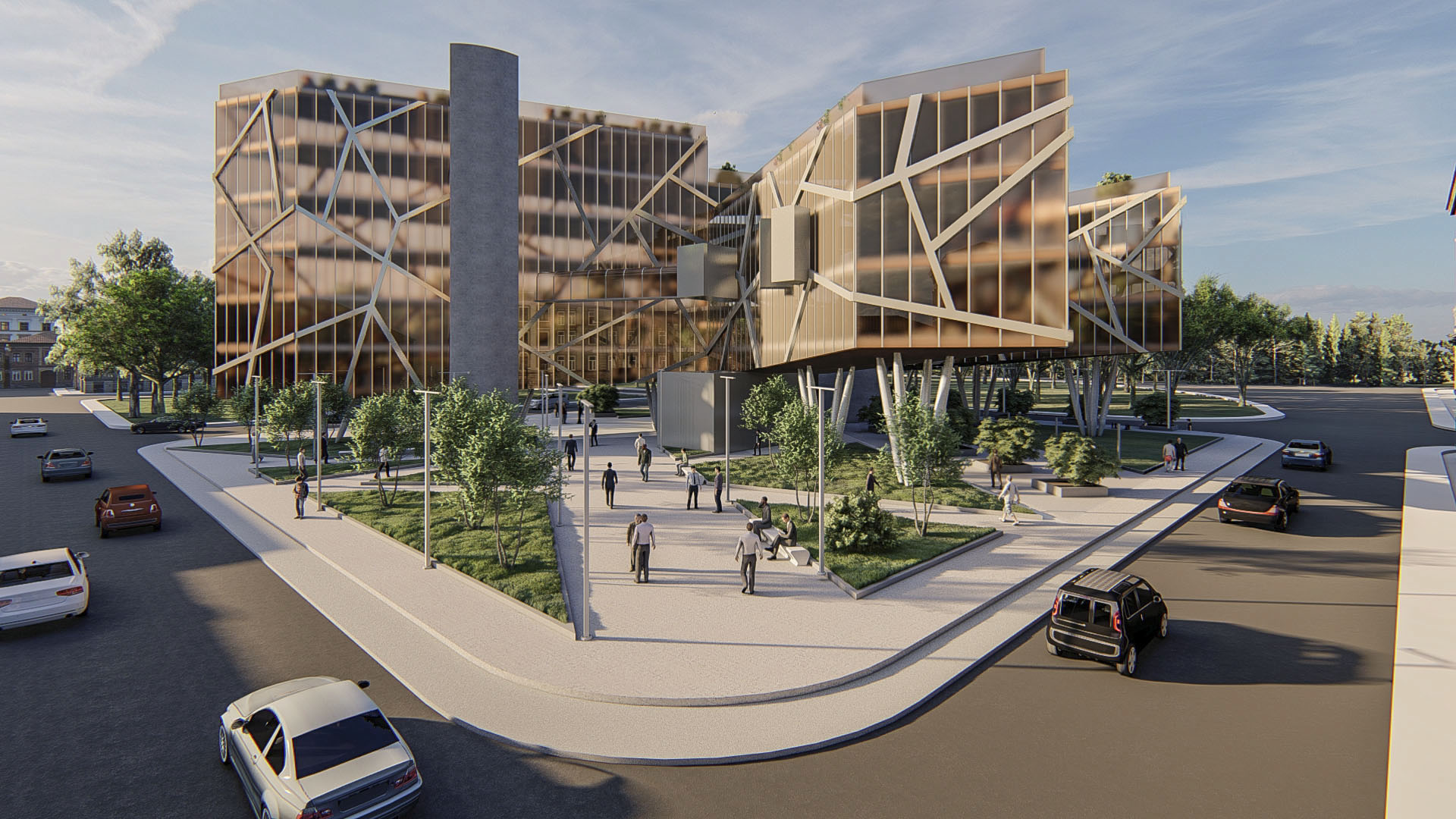
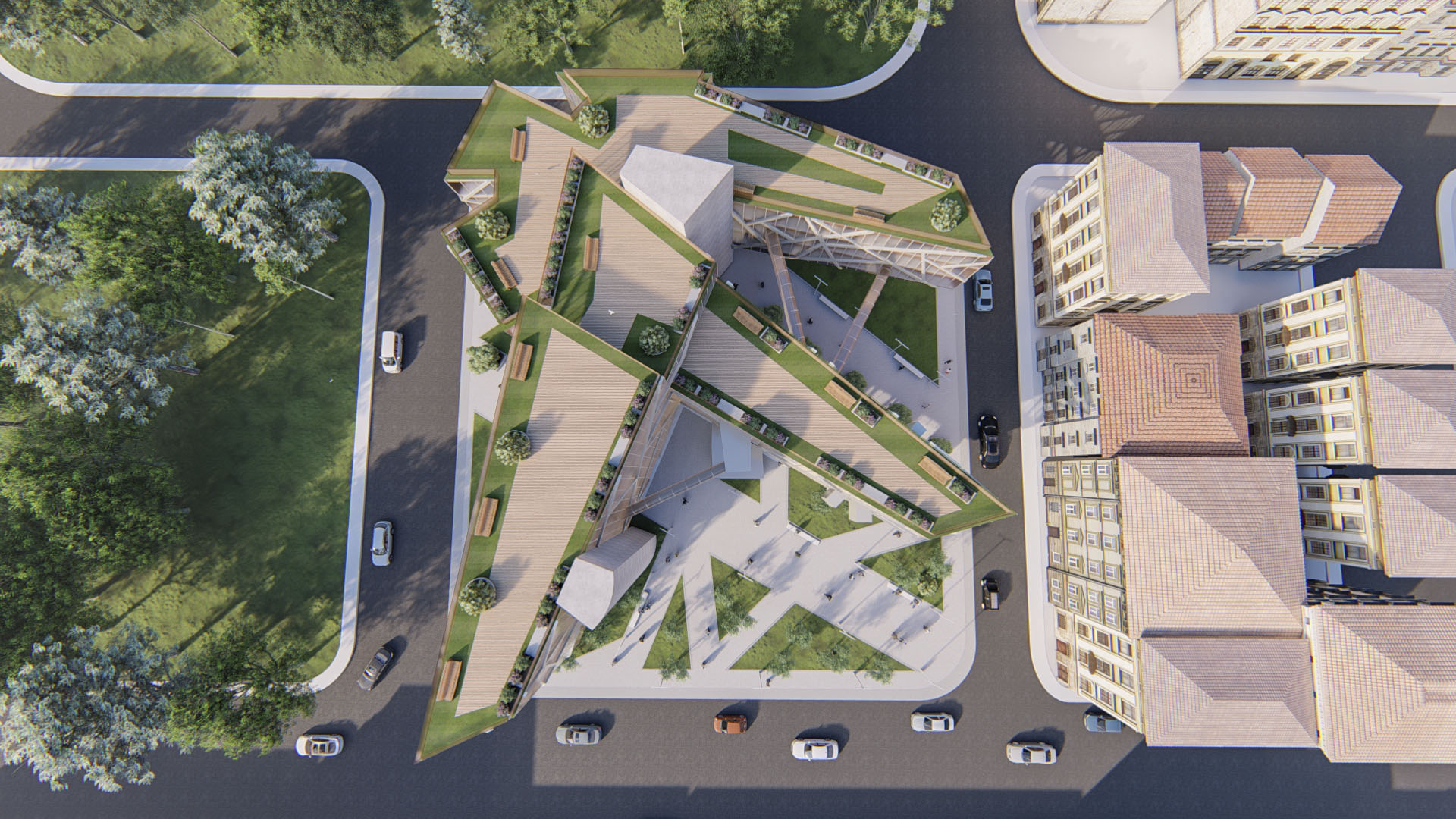
The new National Library of the Czech Republic is designed as a center of knowledge which must function as a rhizome, where the reading of the architectural space is in constant movement, in continuous flow and connection with other different spaces to give rise to other connections. It is just like the flow of information from a network of fragmented and dislocated spaces; from a network of combinatories, variants and space mutations, where the right angles are intertwined and broken, obtaining various forms and visual readings of public space.
It is an architectural space against-genealogy of the same, of the arboreal thought, of a system that does not respond to any established or generative and even less hierarchical system. On the contrary it is acentric and is defined only by possible states of connection lines (joints) to other new states (spaces) to form new configurations and readings of the inner space, it is about making an entire internal network of multiple and changing connections.
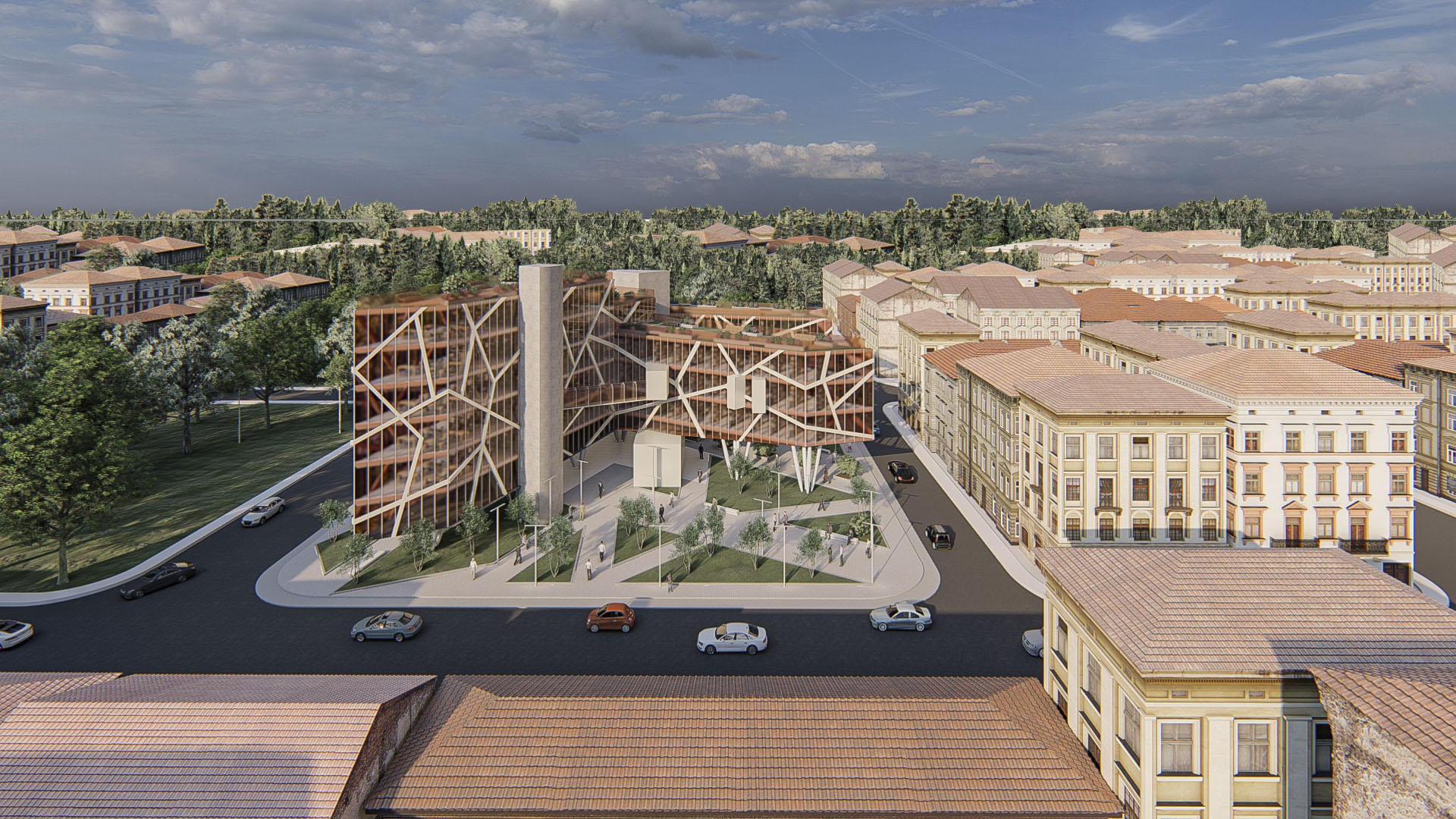
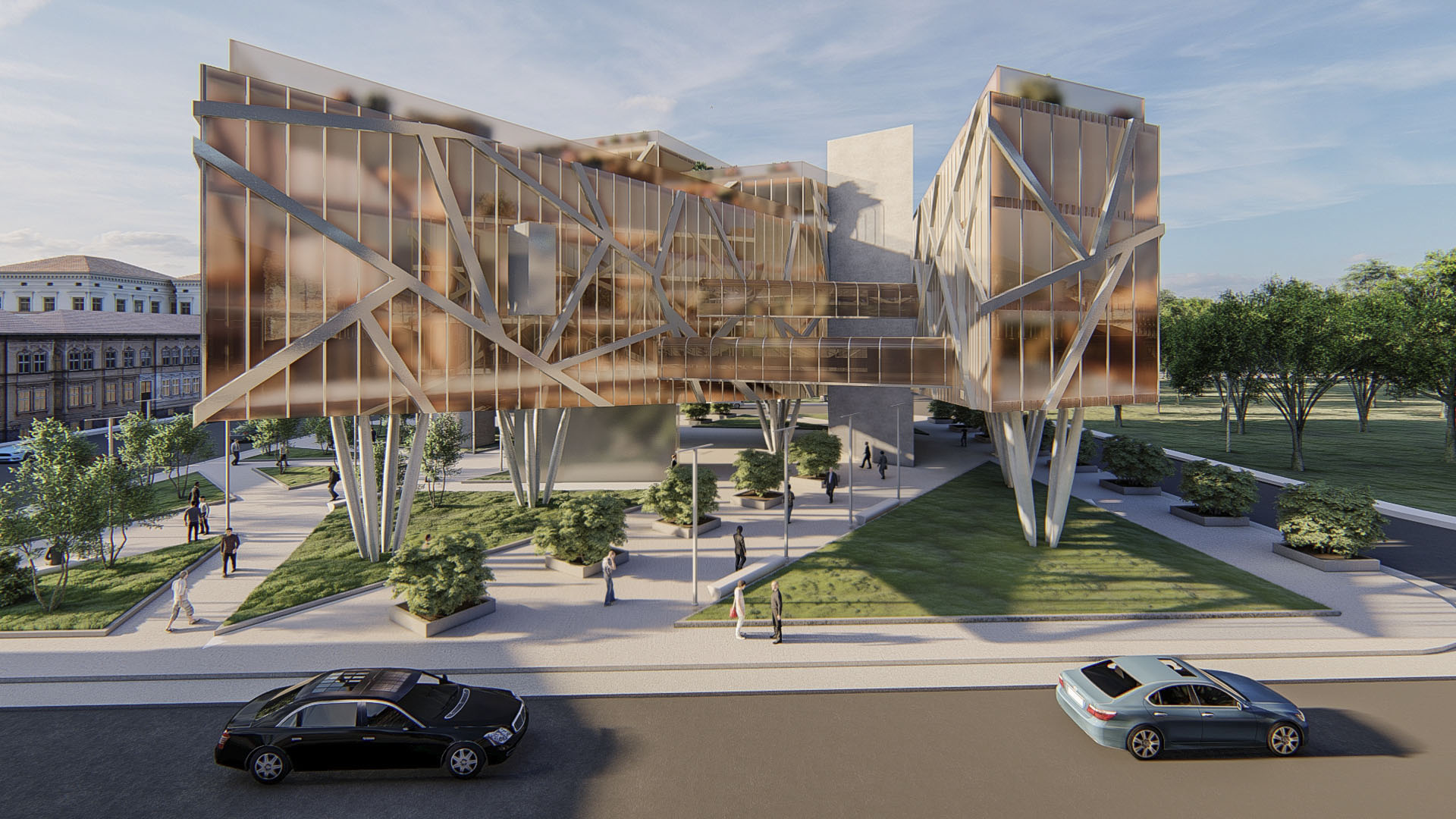
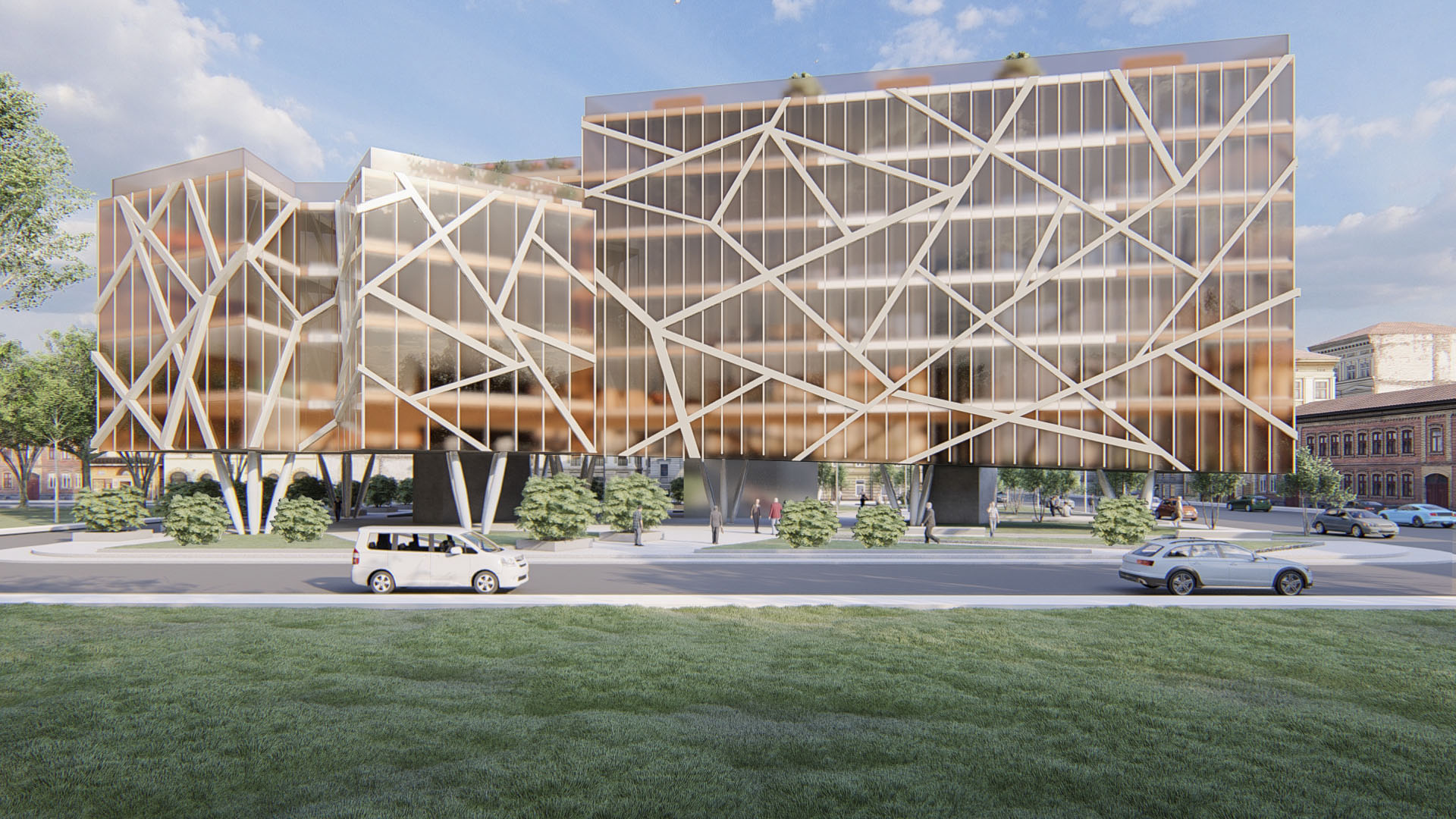
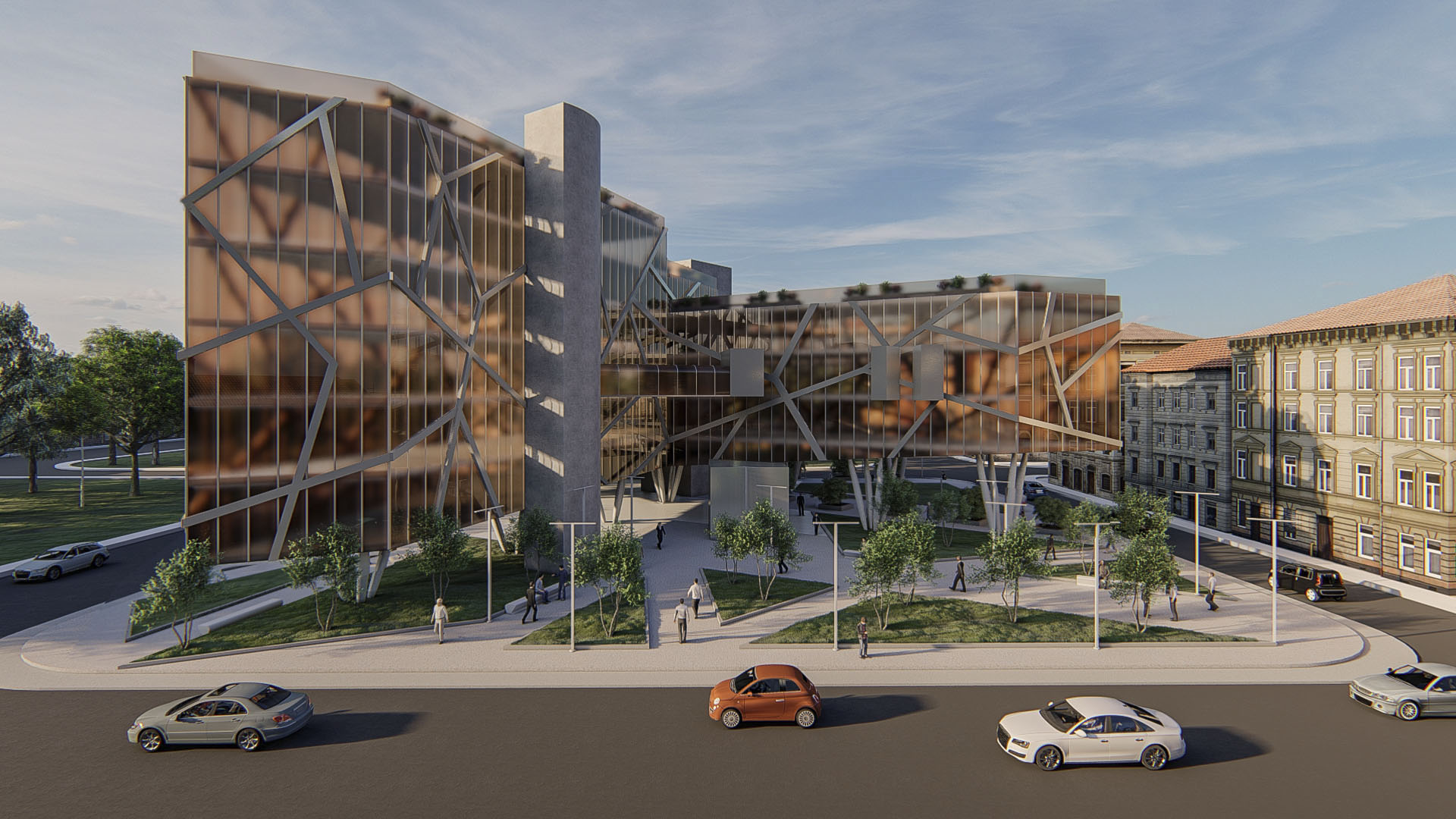
This formal spectre of the building is perceived as a provocative form from the skin of the building, which sometimes becomes translucent other opaque or transparent, that is, mutant with steel straps in all directions representing the lines of escape from knowledge and forming a new visual fabric of the building.
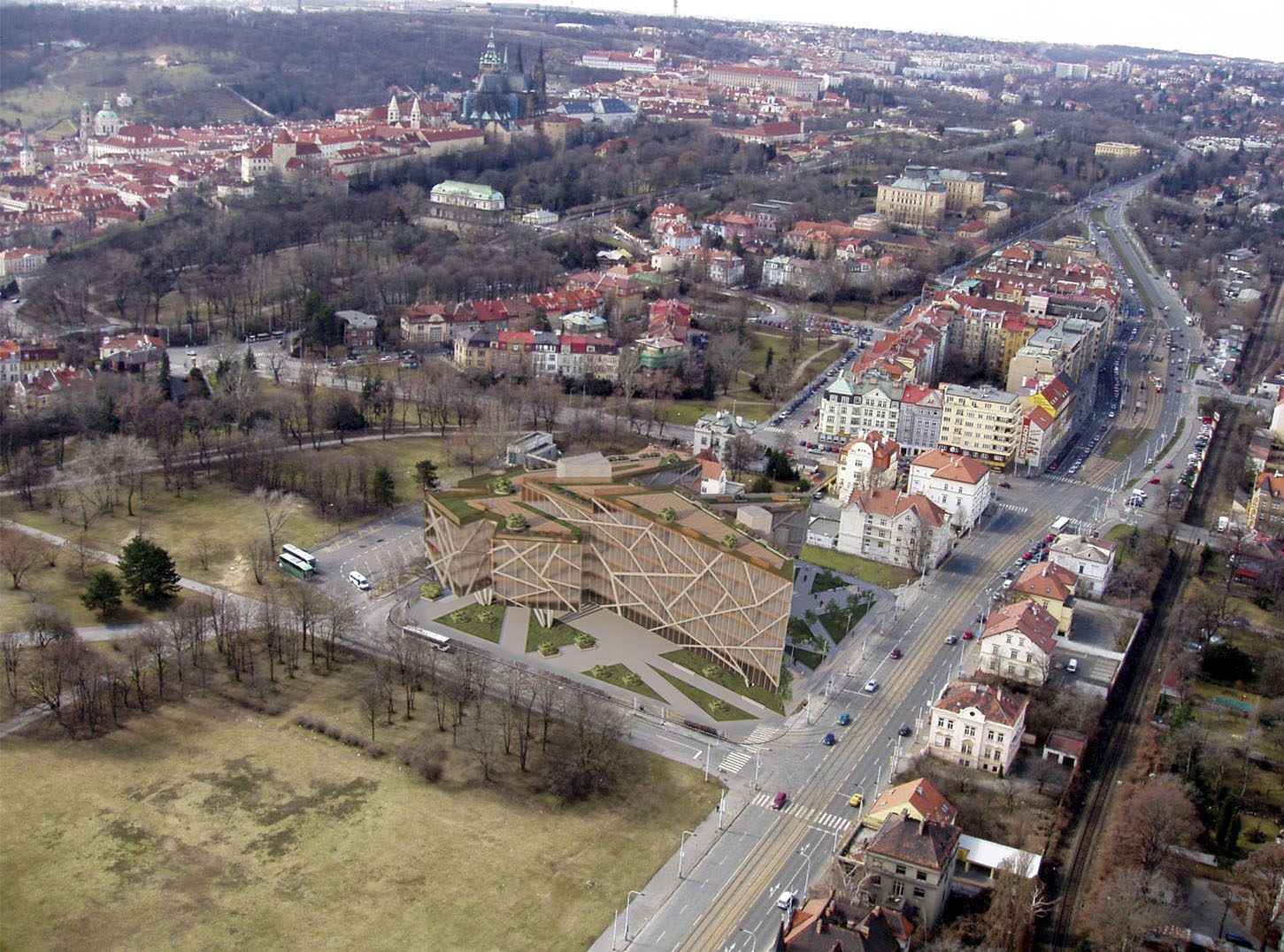
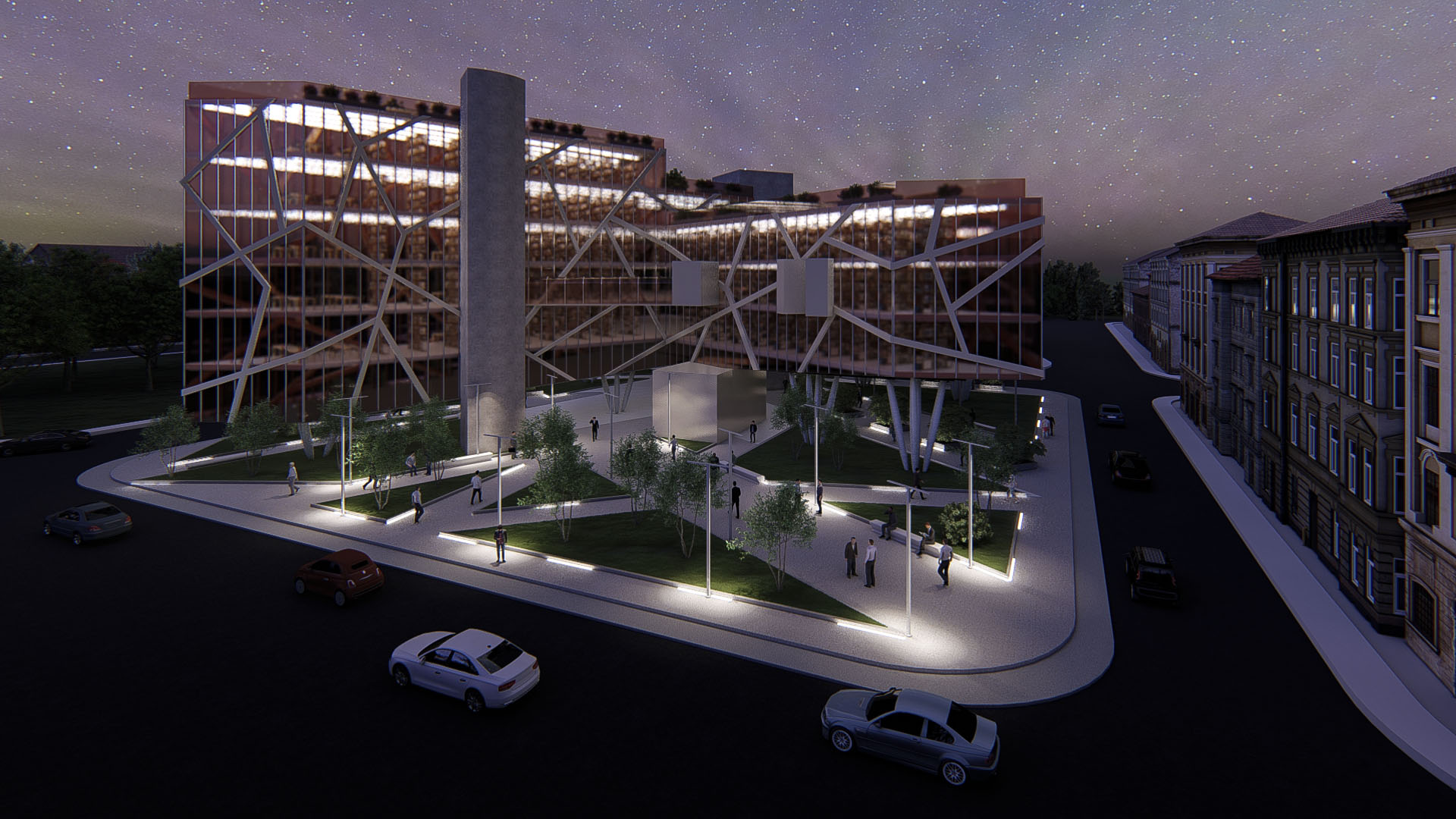
The building is located on a large extension of green land at one end of the Letna plateau in Prague City, and creates a huge contrast with the urban context because of its plastic appearance as the building seems to be floating at the floor level which causes a huge public square, and at the same time we question the stability of the structures with the inclination of the steel columns that support the building, which we zoning and place to the best views of the city.
The library was fixed in 50,000 m² It will host the memory of 10 million books, microfiche, films, computers, databases, exhibition areas, gallery, coffee and the most diverse and modern educational services for teaching and learning knowledge away from classic typological fixations.